Showing posts with label food. Show all posts

Wednesday, October 7, 2009

AFJ 2009: Beyond French, Spanish and African-American Hands in the Pot

This year's conference opened on multicultural note, which one would expect from the Crescent City. New Orleans food has many hands in the pot and this panel was devoted to the crossed lines from regions like Croatia, Germany and Latin America into what has become the well-known food of Louisiana. The moderator was Elsa Hahne, author of "You Are Where You Eat: Stories and Recipes from the Neighborhoods of New Orleans." Chef Adolfo Garciai of RioMar noted that saying food is Latino would be the same as assuming that all English-speaking people share a common diet. Croatian native Snjezana Senut-Bjelis noted that her coastal country used mussels in their cooking, but adapted their recipes to incorporate oysters to the point where oysters are now shipped back to Croatia in quantity. Croatians are in Plaquemines Parish, where they can be on the water and fish. The German community brought beer, sausage and baking and settled in the Saints parishes where they learned French and assimilated somewhat, according to Sevilla Finley. One of the best-known German bakeries in New Orleans specialized in French bread. Frieda Waeckerle Arwe, president of the Friends of the German-American Cultural Center (Finley is a co-founder). Arwe focused on the southern most of the 16 states in the country. All German food is fresh. Germans grow everything they cook.

Sauerkraut and red cabbage are featured on Oktoberfest but the sausages are imported from Texas and Illinois to name two places.

Potato pancakes and onion pies (“one of the most fantastic things you can eat,” Arwe notes) are two exports that are well-known for you. The only German restaurant in New Orleans, Kolb’s, closed in 1994. Hahne asked why no one has stepped up since. Arwe notes that assimilation has taken the toll. People don’t know the role Germans played in settling New Orleans. Also, the World Wars saw the muting or elimination of names and cultural touchstones. Some places are doing German cuisine a couple of nights a week.

Rev. Vien Nguyen of Mary Queen of Vietnam Catholic Church, noted that Vietnamese cooking was scary and unknown in the 70s. Vietnamese chefs often ran Chinese restaurants but had some Vietnamese dishes on the menu. Later, in the 90s, the actual cuisine came to the forefront. Vietnamese also run New Orleans’ Japanese restaurants, but had created hybrids like raw fish wrapped in rice paper. The cuisine uses a lot of seafood, but Vietnamese don’t go for raw oysters. Some Vietnamese eat raw oysters but not with horseradish and Tabasco. Redfish was popular but used in sushi with bread crumbs and sauce with fresh herbs, not blackened. The Vietnamese are along the East Bank and West Bank.

Gar is not popular with Caucasians, but Vietnamese make it into a paste and it’s sweet. Vietnamese don’t eat much bread,as it is not substantial. Rice is more solid for fueling agricultural. Banh mi is the Vietnamese po’boy. Nguyen noted that Vietnamese grow their own herbs and sell them at an open-air market. The market was closed for six months, but it took Winn Dixie two years to come back. Many Vietnamese grow vegetables and herbs in their backyards. Growing grass is an insult. Nguyen likes Gar Kho, simmered croaker with tomato and spices and a three-day cooking time.


-- Claudia Perry, "official" AFJ conference blogger

Thursday, May 1, 2008

save these for friday afternoon

First, view them. Then go home and make yourself a well-made drink. Don't scratch your nose. Don't use Rose's lime juice. Don't wink. And as you drink it, give thanks that no matter how bad your week was, you didn't make videos like these:


http://www.jeffreymorgenthaler.com/2008/how-to-make-a-daiquiri-the-american-bartending-school-way/


http://www.jeffreymorgenthaler.com/2007/how-not-to-make-a-mint-julep/


http://www.jeffreymorgenthaler.com/2007/how-to-make-sexy-european-mojito-drink/

Monday, April 28, 2008

bon appetit to you, too, alan

I was reading Alan Richman's commentary in Bon Appetit, on the tribulations of the professional eating. And I was enjoying myself, nodding in agreement as only a fellow food traveler can, appreciating his point that getting paid to eat comes with its own penalties.

And then I came upon this section:

"The life of the restaurant critic isn't the same as that of food writers. You do not have to feel sorry for them.

"When they travel, hotels know they are coming, so they are upgraded to the Elvis Presley Suite. When they eat out, chefs who haven't been seen in their kitchens since the advent of the Food Network fly in, borrow a stained apron from their sous-chef and walk wearily through the dining room, complaining that they were up at dawn picking out organic produce at the farmers market.

"Food writers get to do the easy stories, the ones about prizewinnning pumpkins."

Excuse me? Does anybody have any idea what he's talking about? OK, Sarah Dickerson at Slate doesn't bother to actually do any research outside NYC before declaiming on newspaper food sections. But Richman? I thought the guy was smart. Smart-mouthed, but smart.

Thursday, April 24, 2008

Would my kid be a son of a biscuit eater?

An e-mail I got today: "Kathleen, hello! I hope this email finds you well. I am working on a special project and was hoping you could lend your talent and expertise…it’s for Bojangles’ Restaurants – we are filming a commercial using “real people” to give their first hand perspectives on Bojangles’ biscuits – the concept is to basically give a review of the biscuit on camera. We will be shooting on May 1 – it would not require much of your time or travel. We can shoot outside of the Observer building or where ever is convenient for you. Let me know if you’d be interested."
Anybody have a story to top that one?

Kathleen Purvis, The Charlotte Observer.

Monday, January 28, 2008

Culinary Poetry


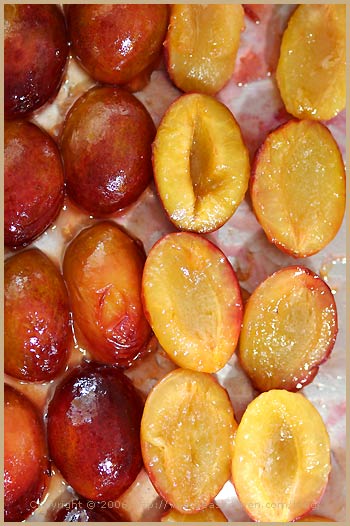
“I have eaten” begins the poem, a phrase appealing to all gourmands, arousing our curiosity before the next line tempts our eyes, our tongues, our touch: “the plums.” As the poem unfolds, we learn this fruit is “delicious / so sweet / and so cold.”

In “This Is Just To Say” by William Carlos Williams, 28 words in twelve lines say much about taste, sensuality, desire, temptation, contrition, impatience, hunger, and satisfaction. [Copyright forbids my quoting the whole poem here, so please read it at the Academy of American Poets.]

Our speaker speculates that the recipient of the message is “probably / saving / for breakfast.” The time of the poem might be night or early morning if the next meal for which the plums are “probably” being saved is “probably” breakfast. Are we reading a note on the door of the refrigerator, or are we overhearing a spoken voice, perhaps a confession to the person who has discovered our speaker standing in the kitchen, cheeks flushed and fingers dripping juice, or a whisper in the ear of a sleeping lover?

The word “delicious” is decisive, stretching over the tenth line like an outreached hand. The fruit, both “sweet” and “cold” was too tempting and was worth whatever penance the speaker will be asked to pay, perhaps expects with “Forgive me.” Our speaker likely seeks understanding, not punishment, hoping the person who chilled the plums will empathize with such temptation of the senses, the fruit irresistible but not clearly forbidden, the pleasure like the language of the poem, so simple and “so sweet.”

Perhaps our speaker says “Forgive me” at the beginning of the last stanza to acknowledge the sin of gluttony after eating more than one plum—after eating all the plums though we don’t know how many except the plural word meaning multiple—and hasn’t saved even one for the person to whom the apology is addressed. Too hungry! Too tempted! And ultimately satisfied or satiated.

The single sentence of this poem has no terminal punctuation, no official ending except for the absence of any other word after “cold” in the final line. Was the speaker discovered mid-bite of the last plum? Was the sentence interrupted by a slap, a kiss, or a healing touch? The gentle rhythms and soft syllables of the poem, like ripe plums, invite speculation (“probably”) and suggest satisfaction (“delicious”), a tribute to the sensory and sensuous, especially the sense of taste.

William Carlos Williams (1883-1963) “sought to invent an entirely fresh and singularly American poetic, whose subject matter was centered on the everyday circumstances of life,” according to his biographical sketch at the Academy of American Poets. Among these subjects were sharp visual portraits that suggested the very nature of objects and the richness of meaning surrounding them. He was also a practicing physician, a man who knew about the healing powers of the ordinary, like temptation, forgiveness, and ice-cold plums.

Google offers more than 130,000 images for plums. To complement “This Is Just To Say,” I am particularly drawn to the photograph above accompanying a recipe for Plum Clafoutis from Béatrice Peltre at her blog, La Tartine Gourmande.


Your response to this poem and post and your own favorite culinary poetry are welcome here.

- posted by Donna Reiss


Thursday, January 3, 2008

Ethics for Dummies

Okay, let’s start the year out right with an ethics discussion--and maybe one on international diplomacy while we’re at it.

The following comes from an e-zine posted by the food and travel writer David Rosengarten (www.davidrosengarten.com) last fall. His advice made me cringe (I have highlighted the most egregious statement):


People on the Road Don't Take You Seriously in Your Quest for Authentic Food

There's a whole world out there just itching to ignore you when you say, “I want to taste authentic local cooking." That's why you have to repeat it over and over again, like a mantra. If the person you're talking to speaks reasonable English, explain your quest in detail, supplying the emotional history behind your need. Make an impression. Lie if you have to; tell him or her that you're a journalist, on assignment to taste the real food of the country.
Do whatever it takes--but make it clear to restaurateurs, or to people from whom you're seeking restaurant advice, that you want the real thing! Initially, you may have trouble getting anything at all. A few years back, I led a group of Americans on a gastronomic tour of Thailand. We arrived late Saturday night and went to bed champing at the bit to taste Thai food in Bangkok. When we boarded our tour bus the next morning, we asked our Thailand guide, who knew full well we were a gastronomic group, where lunch was going to be. "Well, during lunchtime we're going to a jewelry workshop," she said. "If you want lunch after that, back at the hotel you can get anything you want."

Sensing trouble, I said, "Most of us would rather skip the jewelry and go to an authentic Thai restaurant for lunch." She looked perplexed, then said, "Thai restaurants aren't open for Sunday lunch." This contradicted what I'd read in my books, but I couldn't budge her. Finally, amidst the beautiful temples and pagodas we were visiting in the morning, I managed to get a consensus from the group: everyone in it was willing to boycott the tourist-trap jewel shop and to set off with me looking for lunch. When I told her, she caved. "Okay," she said, "I'll take you to a place I know." She did, it was fabulous, and our trip was off to a great start. Had I not persisted, however, my first meal in Thailand might well have been southern fried chicken.

Something else frustrated us in Thailand, as it does in all countries with spicy-hot cuisine: they never trust that Americans like it hot. Once again, you have to say over and over: "Please serve us the food exactly the way you like to eat it. We like really spicy food." I was a dinner guest once in Goa, one of India's spiciest regions, at a private home; despite my letters to my hosts, the letters of the travel agency that set the dinner up, and the exhortations of our local tour guide (whom I lectured in advance of the dinner about my desire for authentically spicy food)--well, you guessed it. The food had not a lick of spice in it, and many of the dishes were Americanized versions of the local food. This was a meal to introduce me to Goan food--and there wasn't even any vindaloo on the menu. When I discreetly inquired about vindaloo, they said, "Vindaloo? Oh, you wouldn't like vindaloo." Aaaargh!

One reason this happens is that people in foreign countries want you to like them--and their food. It's not hostility that's messing up your quest--it's ill-placed niceness. Remember that all they know of American food may be McDonald's, and they can't begin to imagine that you really want something else. It's your job to convince them!

Once, I was on a wine writers' trip in northern Italy, and we were given a lunch at one of Italy's largest wineries. Food-wise, they did well; they prepared a wonderful meal featuring local cuisine, including a hand-rolled pasta called bigoli that I shall never forget. We couldn't wait to see what they drink with bigoli in the region--so our jaws (and spirits) dropped when they served us an American Chardonnay. "We just acquired this American winery," they told us, "and we thought you'd love to taste something from your own country." Don't they get it? No, they often don't. Remember that.

Another factor that mucks up your quest for authenticity is the internationalization of food and your host's well-intentioned desire to show you what he or she considers to be the most up-to-date cooking of his or her region. Unfortunately, today, the most "impressive" restaurants in some regions are fusion-confusion, one-world kind of deals. I'll never forget arriving in Vigo, a lovely town in Galicia, in northwest Spain, with the largest fish market in Europe and a great tradition of Gallego seafood cooking. My hosts promised me that dinner would be at the best restaurant in Vigo, and I couldn't wait to get myself around those local shellfish specialties. I couldn't believe it when I wound up at a place that was serving foie gras with a fruit sauce, fish fillets with potato scales, and beef tenderloin with a wine sauce. And, oh yes, crème brûlée. The locals didn't realize that you can get this kind of food in any city in the world today. For them, truly, this restaurant was a big deal--something new, something cutting edge. For me, unfortunately--despite the sweet people I was with--it was a big drag. Be careful! Be clear about what you're looking for! Remember the mantra: "I want to taste authentic local cooking! I want to taste authentic local cooking! I want to taste authentic local cooking!" Sometimes I feel like wearing a badge with those words on it. Translated into local dialect. Oftentimes you need it. –end--


My comment:

I don’t have a problem with anyone seeking out local cuisine — just don’t lie about being a food journalist! We don't muscle into a country and demand special treatment. You’re a guest in that country. It is your job to be polite, learn their customs and make friends with a trusted local source. Organizations such as the Association of Food Journalists have strong codes of professional standards and ethical conduct. Rosengarten's instructions are an insult to working journalists covering food and any other subject.
--Patty LaNoue Stearns, Traverse City, MI, food and travel writer